South Korea stepping up to mediate tensions between China and Japan: Foreign Minister
Sign up now: Get insights on Asia's fast-moving developments

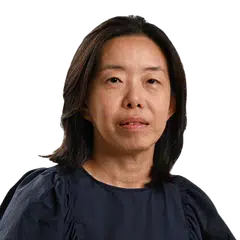
South Korean Foreign Minister Cho Hyun said Seoul is seeking to play “a constructive role necessary for peace and development” in North-east Asia.
PHOTO: REPUBLIC OF KOREA MINISTRY OF FOREIGN AFFAIRS

- South Korea aims to foster peace in North-east Asia, prioritising dialogue amid Japan-China tensions heightened by Taiwan remarks.
- Seoul values ASEAN forums for bringing together China, Japan and South Korea and seeks stronger ties with Singapore, a "valued partner".
- Despite US-China rivalry impacting the region, South Korea seeks regional stability, balancing its US alliance with constructive relations with China.
AI generated
SEOUL – The first two work trips undertaken by South Korean President Lee Jae Myung in 2026 were to Japan and China, and this was no coincidence.
Amid a deepening rift between its two closest and most consequential neighbours Japan and China, South Korea is seeking to play “a constructive role necessary for peace and development” in North-east Asia, said its Foreign Minister Cho Hyun in an interview with The Straits Times.
“There are differences among North-east Asian countries on some issues, but we believe we can continue expanding our room for diplomatic manoeuvre by prioritising dialogue over confrontation and engagement over isolation,” he said.
Tensions have been running high between Beijing and Tokyo since November 2025 over Japanese premier Sanae Takaichi’s remarks on Taiwan, in which she had suggested that any use of force by Beijing against Taiwan, which China claims as its own, could justify a military response from Japan.
Seoul places great importance on peace and stability in the region, said Mr Cho.
With the three North-east Asian nations being “closely interconnected in many respects”, such as economy and security, he added that it is particularly important to identify common ground and opportunities for cooperation.
For that, ASEAN plays a key role.
Mr Cho sees the grouping’s forums of ASEAN Plus Three (APT), the East Asia Summit (EAS), and the ASEAN Regional Forum (ARF) as offering platforms to bring China, Japan and South Korea together “even in difficult times” to promote dialogue and trust-building.
President Lee’s choice of Singapore and the Philippines, the incoming and current ASEAN Chair respectively, for his first bilateral visits to the South-east Asian region demonstrates the importance of ASEAN as a close neighbour and partner of South Korea, said Mr Cho.
Singapore takes over from the Philippines as ASEAN Chair in 2027.
Mr Cho, 68, had accompanied President Lee during the latter’s state visit to Singapore on March 1 to 3.
In his wide-ranging written interview with ST following the visit, Mr Cho also addressed the relationship South Korea has with its security ally, the United States, as well as the consequential relationship between the US and its rival in the region, China, and Seoul’s fraught ties with Pyongyang.
On Singapore, Mr Cho said the city-state was picked as President Lee’s first bilateral visit destination in South-east Asia as South Korea seeks to enhance solidarity with like-minded friends and partners facing similar strategic challenges.
South Korea and Singapore, as responsible middle powers, are working actively together to safeguard and promote an innovative, open and inclusive international order, he said.
Describing Singapore as a “valued partner within the ASEAN-ROK cooperation framework”, Mr Cho said that South Korea hopes to work closely with Singapore to advance the ASEAN-ROK vision of “a contributor for dreams and hope, a springboard for growth and innovation, and a partner for peace and stability”. ROK is the abbreviation for Republic of Korea, South Korea’s formal name.
“In order to navigate today’s hyper uncertainty, it is more important than ever to have a reliable friend with whom we can overcome such challenges together,” said Mr Cho.
Trump-Xi summit a ‘meaningful moment’
As the world awaits the upcoming summit between US President Donald Trump and his Chinese counterpart Xi Jinping, set to take place in Beijing later in March, South Korea is hoping that the meeting will serve as a “meaningful moment for risk management and stability, one that strengthens guardrails against economic shocks and helps manage security risks”, he said.
The White House has announced that Mr Trump will visit China from March 31 to April 2, while a Chinese Foreign Ministry spokesman would say only that both sides remain “in communication” over the trip.
Speaking to foreign and Chinese media on March 8 during the Two Sessions, China’s annual parliamentary meetings, Chinese Foreign Minister Wang Yi signalled that Beijing might be ready for a deal with Washington by calling it “heartening that the leaders of the two countries have led by example by maintaining positive interactions at the top level”.
Stable US-China relations are indispensable not only for peace and prosperity of the Korean Peninsula but also for that of the broader region, said Mr Cho, a veteran diplomat who has previously served as South Korea’s permanent representative to the United Nations.
South Korea has long struck a delicate balance between its core security guarantor, the United States, and its largest trading partner, China.
Mr Cho told ST that Seoul’s approach is to remain firmly anchored in its alliance with Washington, while building a constructive relationship with China.
“We welcome efforts by the two leaders to sustain and, where possible, finalise key understandings in trade, thereby helping avoid a re-escalation of tariffs and other trade-related frictions,” he said.
“Ultimately, Korea expects the upcoming summit to set clearer ‘rules of the game’ and thereby to promote long-term stability and predictability in the region,” he said.
Big power rivalry aside, other imperatives are muddying the waters.
After ST’s interview with Mr Cho, there were reports that US Forces Korea (USFK) was preparing to relocate parts of the Terminal High Altitude Area Defence (THAAD) system and some batteries of the Patriot air defence system stationed in South Korea, to augment the US military’s efforts in Iran.
Addressing domestic concerns that the redeployment of military assets to the Middle East could compromise South Korea’s defence posture, President Lee said during a Cabinet meeting on March 10 that Seoul had objected to the transfer, but “it is also the reality that we cannot fully enforce our position (on the US)”.
Mr Lee has emphasised that the transfer does not significantly affect South Korea’s deterrence capabilities towards North Korea, given the huge gap in the two Koreas’ conventional combat power and military capabilities.
Trade ties between South Korea and the US also hit a snag on Jan 27, when Mr Trump threatened to raise reciprocal tariffs to 25 per cent from 15 per cent, citing a lack of progress by Seoul in fulfilling the US$350 billion (S$447 billion) investment pledge.
This commitment formed part of a tariff deal that Mr Trump had reached with Mr Lee on the sidelines of the APEC summit in Gyeongju on Oct 29, 2025.
On March 12, South Korean lawmakers moved to fast-track legislation to establish a new state-run corporation to implement the investment package.
Mr Cho told ST that South Korea remains committed to implementing the trade deal and security-related commitment in close consultation with the US.
“We are living in an era of heightened uncertainty in which economic and security issues are increasingly intertwined. In such times, a steadfast anchor in foreign policy and art of flexibility are essential. For South Korea, that anchor is its enduring alliance with the US,” he said.
Will Trump meet Kim soon?
Amid expectations that Mr Trump might meet with North Korean leader Kim Jong Un on the sidelines of the US-China summit, South Korea will continue to play its role as a “pacemaker” in the resumption of dialogue between the two leaders, said Mr Cho.
He noted that the deepening ties between Russia and North Korea, fuelled by Pyongyang’s support for Moscow in the Russia-Ukraine war, as well as heightened uncertainty stemming from the Iran crisis, have further complicated the strategic calculus in both Washington and Pyongyang.
“While differences persist between the US and North Korea over the preconditions for dialogue, both sides have in principle kept the door open,” said the foreign minister, adding that it would be premature to predict if Mr Trump and Mr Kim would indeed meet.
Since his return to the White House for a second term, Mr Trump has repeatedly expressed his desire to rekindle his personal diplomacy with Mr Kim, while the North Korean leader most recently said that there was “no reason not to get along with the United States”, provided that Washington withdraws its hostility towards North Korea’s nuclear programme.
Speaking at the North Korean Workers’ Party 9th Congress, which took place on Feb 20 and 21, Mr Kim reinforced his hardline stance against South Korea, describing the South as a “complete enemy”.
He pledged to “permanently exclude South Korea from the category of compatriots”, adding that the conditions for engagement with the South “have been completely erased”.
The party congress is held every five years and sets out the roadmap for North Korea’s future policy goals.
Mr Cho said Mr Kim’s words were “largely within the range of expectations”, but stressed that Seoul remains committed to eliminating the “decades-long, deep-seated hostility”, and building mutual understanding and trust between the two Koreas.
“I believe my government’s relentless efforts to that end will open the way for dialogue and cooperation,” said Mr Cho.